

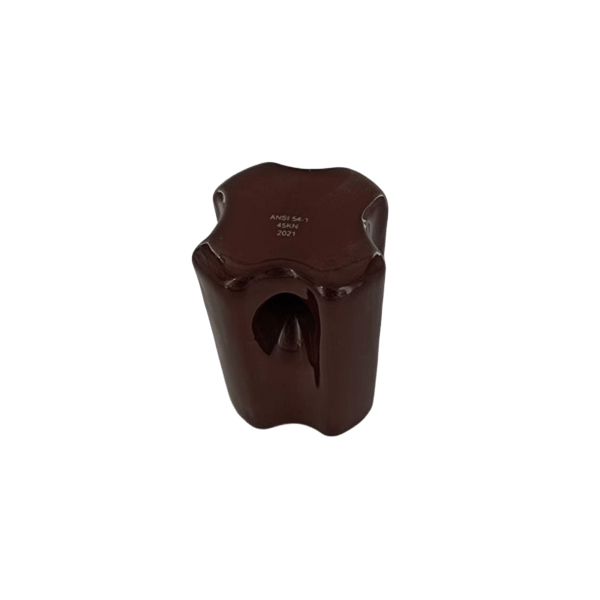
Superior Electrical Insulation Properties
Dielectric Strength
Porcelain telephone pole insulators exhibit an impressive dielectric strength of up to 60 kV/cm. This high level of insulation ensures that electrical currents do not breach the insulator, thereby providing effective separation between live conductors and supporting structures. The factory process of creating porcelain insulators involves strict quality control to ensure uniformity in dielectric properties across all units.
Low Conductivity
Among the reasons for the widespread adoption of porcelain insulators is their negligible electrical conductivity. The combination of alumina and other clay minerals enhances this property, making them ideal for keeping currents contained within the wires and preventing leakage. Manufacturers ensure that the composition remains consistent to maximize performance across varying voltage applications.
Durability and Stability of Porcelain Insulators
Longevity
Porcelain insulators demonstrate excellent longevity due to their resistance to aging and environmental degradation. Unlike some materials that may corrode or degrade over time, porcelain maintains its structural integrity, offering reliable service for several decades. Leading suppliers often guarantee their products to last for over 50 years under normal operating conditions.
Thermal Stability
Porcelain's thermal stability is another critical factor in its preference. It can withstand temperature fluctuations without compromising its mechanical or electrical properties, making it suitable for a wide range of environments. The insulators do not expand or contract excessively, which prevents structural stress and potential failure.
Mechanical Strength and Versatility
Mechanical Endurance
The mechanical strength of porcelain insulators is noteworthy, as they can support significant tensile loads, essential for suspension and tension applications. Manufacturers rigorously test each unit to ensure it meets specific standards, typically requiring a load endurance of several kilonewtons.
Design Flexibility
Porcelain can be molded into various shapes and configurations, accommodating a broad spectrum of applications. This versatility allows for the creation of different types of insulators, such as pin-type and suspension insulators, which meet specific installation requirements.
Environmental Resistance and Reliability
Weather Resistance
Porcelain insulators exhibit remarkable resistance to weather conditions, including rain, snow, and UV radiation, which are common challenges in outdoor applications. The material's non-porous nature prevents moisture ingress, thus maintaining high insulating properties even during adverse weather.
Chemical Resistance
Porcelain's resistance to chemical reactions prevents degradation from pollutants or chemicals in the atmosphere, which could otherwise compromise the insulators' performance. Suppliers ensure that the insulators are manufactured to withstand such conditions, thereby extending their operational lifespan.
Safety and Risk Reduction
Fire Prevention
Because porcelain does not conduct electricity, it significantly reduces the risk of fire that could arise from electrical faults. This safety feature is critical for maintaining secure and reliable power distribution networks, especially in densely populated areas.
Shock Resistance
In the event of wire breakage or pole collapse, porcelain insulators play a crucial role in preventing electrical shock by isolating faulty sections. This capability protects maintenance personnel and equipment, thereby reducing the risk of accidents and service interruptions.
Ecological and Recycling Advantages
Natural Composition
Porcelain insulators are made from natural materials like clay and alumina, which are abundant and non-toxic. When retired from service, these insulators do not pose a hazard to the environment and can be disposed of safely or even recycled to create new ceramic products.
Recycling and Reuse
The recycling of porcelain insulators can contribute to sustainability efforts in manufacturing processes. Factories often use reclaimed porcelain materials in new productions, reducing the need for virgin raw materials and lowering the overall environmental impact.
Comparison with Other Insulating Materials
Glass Insulators
While glass insulators offer high dielectric strength, they lack the thermal stability and mechanical strength of porcelain. Additionally, glass tends to be more brittle, making it prone to damage from environmental stressors and thus less reliable over time.
Polymeric Insulators
Polymeric or composite insulators provide lightweight advantages but may succumb to environmental degradation more quickly than porcelain. The synthetic nature of polymers also presents challenges in recycling and disposal, unlike the ecologically favorable porcelain.
Historical and Aesthetic Appeal
Historical Use
Porcelain insulators have been used since the advent of high-voltage power transmission, with their usage dating back more than a century. Their proven track record reinforces their reliability and performance in electrical networks globally.
Aesthetic Value
Beyond functionality, porcelain insulators possess a classic and understated aesthetic appeal. They are often collected as vintage pieces due to their distinctive shapes and colors, adding historical charm to electrical infrastructure.
Economic Considerations and Market Demand
Cost-Effectiveness
The production process of porcelain insulators is well-established, allowing manufacturers to offer them at a competitive price point. Their durability and long service life also contribute to cost savings over the lifespan of power infrastructure projects.
Global Demand
The global demand for porcelain insulators remains robust, driven by their reliable performance characteristics. Suppliers continue to meet large-scale orders for utility poles, transmission towers, and telecommunication networks worldwide.
Future Prospects and Technological Advancements
Innovations in Manufacturing
Manufacturers are continually investing in technological advancements to improve the quality and performance of porcelain insulators. Innovations in material science and production techniques are expected to further enhance their electrical, mechanical, and environmental properties.
Expanding Applications
The ongoing need for more robust and efficient electrical infrastructure ensures that porcelain insulators will remain crucial components in power distribution. As renewable energy projects expand, the versatility of these insulators makes them well-suited to meet evolving industry requirements.
Huayao Provide Solutions
Huayao, a leading manufacturer and supplier of high-quality porcelain insulators, offers tailored solutions to meet diverse electrical insulation needs. Our products are crafted with precision and adhere to stringent international standards, ensuring optimal performance and longevity. Whether for utility poles, transmission lines, or telecommunication networks, Huayao delivers dependable and sustainable insulation solutions. Trust Huayao to power your projects with efficiency and reliability.
User hot search: porcelain telephone pole insulators
 Privacy settings