

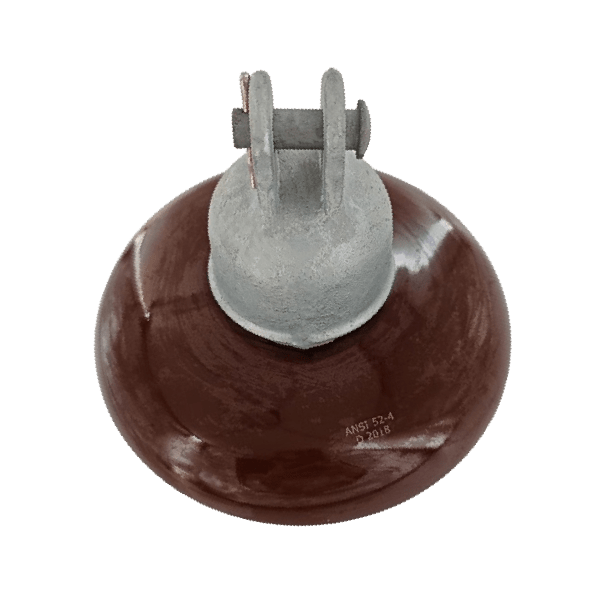
Worried your glass suspension insulators behave like moody weather vanes—perfect on sunny days, but drama queens in fog, dust, and smog? You’re not alone; many engineers secretly suspect their insulators need weather counseling.
To fix this, use data-driven selection, leakage distance checks, and pollution‑specific design guided by standardized tests like those in the IEC 60815 series; see the detailed recommendations in this CIGRÉ report: Pollution Test of Insulator for AC Systems.
⚡ Influence of Rain, Fog, and Humidity on Glass Insulator Leakage Current
Weather strongly affects the leakage current of glass suspension insulators. Wet surfaces increase current, reduce insulation strength, and can trigger dangerous flashover along transmission lines.
Engineers must understand how rain, fog, and humidity change surface conductivity to select suitable strings and optimize maintenance for reliable high-voltage performance.
1. Rain Wetting and Surface Film Formation
Rain forms a continuous water film on glass. This film lowers surface resistance and allows higher leakage current, especially when mixed with salty or dusty deposits.
- Light rain: uneven wetting, partial current paths
- Heavy rain: continuous film, strong current rise
- Wind-driven rain: increases stress on windward side
2. Fog Density and Salt Deposit Re-Wetting
Fog re-wets salt and industrial particles, turning dry deposits into a conductive layer. Coastal networks see sharp leakage current spikes during dense fog events.
| Fog level | Visibility (m) | Leakage current trend |
|---|---|---|
| Light | >1000 | Slight increase |
| Moderate | 500–1000 | Noticeable rise |
| Thick | <500 | High flashover risk |
3. Humidity Cycles and Surface Recovery
Daily humidity cycles drive repeated wetting and drying. This affects how fast leakage current decays after weather events and how quickly deposits harden.
- High night humidity: promotes condensation
- Daytime drying: raises surface resistance
- Repeated cycles: can crack pollution crusts
4. Design and Material Choices Under Wet Conditions
Glass sheds with deep profiles and longer creepage distance limit leakage under wet weather. Utilities may combine glass units with High voltage suspension 70 kN electrical porcelain insulator U70B porcelain insulators to match specific line requirements.
🌫️ Pollution Flashover Mechanisms of Glass Suspension Insulators in Coastal Regions
Coastal salt spray and strong winds drive fast contamination build-up on glass insulators. When moisture appears, these layers become conductive and can lead to pollution flashover.
Understanding how salt density, wetting time, and voltage stress interact helps optimize string length, washing cycles, and selection of advanced suspension units for harsh marine climates.
1. Salt Deposit Density and Surface Conductance
Equivalent salt deposit density (ESDD) is a key index. Higher ESDD greatly increases surface conductance and reduces the flashover voltage margin on glass strings.
- ESDD < 0.05 mg/cm²: low risk
- ESDD 0.05–0.15 mg/cm²: moderate risk
- ESDD > 0.15 mg/cm²: high flashover probability
2. Coastal Wind, Salt Spray, and Orientation Effects
Wind speed and wind direction control how salt spray reaches insulators. Windward strings usually carry higher ESDD and experience more pollution-related outages.
| Location | Wind exposure | Relative ESDD |
|---|---|---|
| Sea-facing side | High | 100% |
| Landward side | Medium | 70% |
| Sheltered spans | Low | 40% |
3. ECharts-Based Example: Pollution Level vs Flashover Voltage
The following bar chart shows an example trend: increasing pollution level lowers the flashover voltage of glass suspension insulators in coastal conditions.
4. Mitigation: Line Design and Maintenance Strategies
Engineers may install longer strings, apply live-line washing, or use hybrid strings with 52-3 suspension porcelain insulator insulator for transmission and distribution lines to manage coastal pollution risk.
🔬 Laboratory Test Methods for Evaluating Glass Insulator Pollution Performance
Lab tests simulate real pollution and weather to measure flashover voltage, leakage current, and aging behavior of glass suspension insulators under controlled conditions.
These results guide product design, material selection, and reliability assessment for new and existing transmission projects in polluted areas.
1. Artificial Pollution and Salt Fog Tests
Artificial pollution tests apply known ESDD and non-soluble deposit density (NSDD) on glass sheds, then wet the surface using salt fog or spraying systems.
- Control salt content and particle size
- Measure critical flashover voltage
- Compare different shed profiles and strings
2. Steady-State and Impulse Leakage Current Measurement
Engineers record leakage current under steady AC and impulse voltages. The waveform reveals dry band arcing and partial discharge patterns on the glass surface.
| Test type | Key output |
|---|---|
| AC steady-state | RMS leakage current |
| Impulse | Peak current, flashover level |
| Combined stress | Aging rate indicator |
3. Comparative Evaluation with Porcelain and Composite Units
Labs often compare glass strings with porcelain and polymer units like Electric insulator ANSI 53-5 Spool porcelain insulator to choose the best option for specific pollution and climate conditions.
🏭 Mitigation of Industrial Contamination Effects Using Huayao Glass Suspension Insulators
Industrial zones expose insulators to soot, chemicals, and metallic dust. Huayao glass suspension designs help limit leakage current and extend maintenance intervals.
Careful selection of creepage distance, string length, and shed geometry reduces the impact of heavy smoke and acid mists around power plants and factories.
1. Typical Industrial Pollutants and Their Impact
Common pollutants include cement dust, fly ash, sulfur compounds, and metallic particles. They form rough layers that absorb moisture and increase surface current.
- Cement dust: thick, alkaline layer
- Fly ash: fine, conductive film
- Sulfur mist: promotes surface corrosion
2. Huayao Design Features for Harsh Environments
Huayao glass suspension insulators use toughened glass, deep sheds, and optimized metal fittings to resist contamination, mechanical shock, and frequent cleaning cycles.
| Feature | Benefit in industry |
|---|---|
| High creepage | Lower surface stress |
| Smooth glass | Less dust adhesion |
| Strong hardware | Reliable under vibration |
3. Maintenance Planning and Condition Monitoring
Combining periodic visual checks, thermal imaging, and leakage current monitoring allows utilities to plan washing and replacement before flashover occurs.
🌦️ Long-Term Weather Aging and Surface Degradation Characteristics of Glass Insulators
Over years, UV light, temperature cycles, and repeated wetting slowly change glass surfaces and metal fittings, influencing insulation reliability.
Understanding these aging patterns helps utilities forecast replacement needs and compare the lifecycle performance of glass with other insulator technologies.
1. UV Radiation and Micro-Surface Changes
UV radiation can cause slight surface roughening and change the hydrophilic behavior of glass. This affects how water films form during rain and fog.
- Minor increase in roughness
- Different droplet patterns
- Possible change in pollution retention
2. Thermal Cycling and Mechanical Fatigue
Daily and seasonal temperature swings generate thermal stress. Toughened glass withstands these cycles well, but hardware and seals still require long-term review.
| Factor | Effect |
|---|---|
| Hot–cold cycles | Material expansion and contraction |
| Ice loading | Extra mechanical stress |
| Wind and vibration | Hardware fatigue |
3. Field Monitoring and Aging Assessment
Field tests compare in-service units with new ones using leakage current, flashover voltage tests, and visual inspection to track long-term degradation trends.
Conclusion
Glass suspension insulators must withstand rain, fog, salt, and industrial pollution while keeping leakage current under control. Detailed testing and monitoring support safe and reliable grid operation.
By combining glass with proven porcelain solutions, optimizing creepage distance, and applying targeted maintenance, utilities can reduce flashover events and improve long-term system performance.
Frequently Asked Questions about glass suspension insulator customized
1. What factors should I consider when customizing glass suspension insulators?
You should consider system voltage, pollution level, climate, mechanical load, string length, creepage distance, and maintenance access when defining custom designs.
2. Are customized glass insulators suitable for coastal environments?
Yes. With adequate creepage distance, proper shed profile, and correct string length, customized glass insulators perform well in salt-laden coastal air.
3. How do I choose between glass and porcelain for a polluted area?
Compare pollution severity, expected maintenance, mechanical strength needs, and existing fleet standards. Lab test data and field records help guide the final choice.
4. Can customized designs reduce cleaning frequency?
Optimized creepage distance, smooth surfaces, and tailored shed geometry can lower leakage current and often extend the interval between necessary cleanings.
5. What data are needed to start a customization project?
Provide line voltage, span length, pollution class, climate data, mechanical load details, and any utility standards or test requirements for the new design.
 Privacy settings