

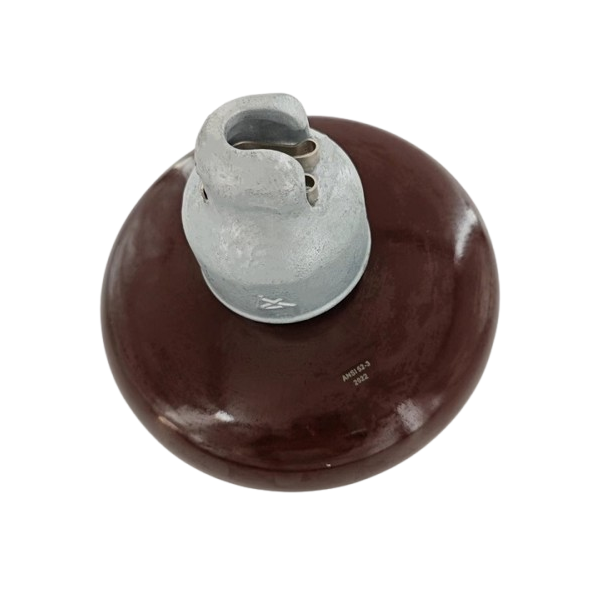
Picking porcelain insulators in 2026 can feel like dating apps for hardware: lots of glossy profiles, zero clue who will crack under pressure—literally.
This guide shows simple steps to judge quality, compare standards, and trust data-backed choices (IEA insulation report).
🔌 Key Performance Standards for 2026 Porcelain Insulators Selection
In 2026, utilities and EPC contractors must choose porcelain insulators that align with updated IEC and ANSI standards, smart-grid needs, and harsher operating environments.
Focusing on electrical, mechanical, and environmental performance helps reduce outages, control lifetime cost, and support grid digitalization projects.
1. Updated Electrical Ratings and Safety Margins
Check basic impulse level, power frequency withstand, and leakage distance against system voltage and overvoltage levels. Select products with generous safety margins for polluted or coastal lines.
- Confirm compliance with IEC 60383 / IEC 60168 or latest ANSI C29 series.
- Match creepage distance to pollution class and expected humidity.
- Use tested designs for lightning-prone regions.
2. Mechanical Strength and System Design Compatibility
Mechanical ratings must support conductor tension, wind, ice, and seismic loads. Verify routine mechanical proof tests, not just catalog values.
- For suspension strings, verify specified SML (kN).
- For pins and posts, confirm cantilever and impact strength.
- Check fittings for compatibility with existing hardware.
3. Standardization and Interchangeability
Using standardized insulator types simplifies inventory and maintenance. In 2026, utilities favor fully interchangeable designs across regions and OEMs.
- Adopt standard ANSI pin profiles to ease replacement.
- Choose common metal end fittings and threads.
- Unify voltage classes across new projects where possible.
4. Application-Specific Product Selection
Select different porcelain insulators for distribution, sub‑transmission, and high‑voltage lines. Match each design to its duty cycle and environment.
- For feeders, consider Pin type insulators for medium voltage ANSI 55-1.
- For heavier loading, use Pin type insulators for medium voltage ANSI 55-3.
- For transmission, select a tested high voltage suspension 40 kn electrical porcelain insulator 52-1 porcelain insulators.
🧪 Critical Material Properties Ensuring Long-Term Electrical and Mechanical Reliability
High quality porcelain in 2026 must offer stable dielectric strength, low porosity, and strong metal–ceramic bonding to handle higher power flows and tighter reliability targets.
Careful control of raw materials, firing cycles, and glaze systems delivers consistent performance over decades of service, even under stress.
1. Dielectric Strength and Low Porosity
Dense porcelain with low water absorption maintains dielectric strength and resists internal partial discharge under wet and polluted conditions.
| Property | Typical Value | Requirement (2026 grids) |
|---|---|---|
| Water absorption | < 0.5% | Very low to prevent tracking and ageing |
| Dielectric strength | > 20 kV/mm | Stable under repetitive surges |
2. Mechanical Toughness and Thermal Shock Resistance
Modern networks see more load swings. Porcelain must resist mechanical fatigue and thermal cycling without micro‑cracking or glaze failure.
- Use designs tested for repeated load cycles.
- Confirm thermal shock tests in quality records.
3. Glaze Quality and Surface Hydrophobicity
High grade glaze prevents surface micro‑cracks, resists dirt build‑up, and helps water run off smoothly, reducing leakage current and flashover risk.
- Look for smooth, even glaze with no pinholes.
- Check color consistency to spot firing problems.
4. Data-Driven Quality Control and Test Records
In 2026, buyers should demand traceable test data for each batch. Visual dashboards help compare suppliers and track long‑term performance.
🌧 Evaluating Insulator Resistance to Pollution, Moisture, and Extreme Weather Conditions
Porcelain insulators must endure pollution, heavy rain, salt fog, UV, and extreme temperatures while maintaining sufficient creepage distance and mechanical strength.
In 2026, utilities should use site‑specific environmental data to guide selection, spacing, and washing or coating strategies.
1. Pollution Classes and Creepage Distance
Match creepage distance to site pollution level to reduce flashovers and cleaning frequency in industrial, coastal, or desert areas.
| Pollution level | Typical environment | Creepage need |
|---|---|---|
| Light | Rural, clean air | Standard |
| Heavy | Coastal, industrial | Extended |
2. Moisture, Rain, and Ice Resistance
Rains and fogs can cause wet flashover. Good shed profiles, glaze quality, and spacing improve performance under wet and icing conditions.
- Check wet flashover test values.
- Use longer creepage in fog or icing regions.
3. UV, Temperature Extremes, and Aging
Long‑term UV and temperature cycles can weaken materials. High quality porcelain and glaze show minimal aging even after decades.
- Confirm artificial aging and UV tests.
- Review field performance data from similar climates.
🔍 Practical On-Site Inspection Tips and Quality Identification Methods
On‑site checks help verify that delivered porcelain insulators meet design and standard requirements before installation and energization.
Use structured visual and dimensional inspections, supported by random sample testing when possible.
1. Visual Inspection and Surface Quality
Inspect each insulator under good light. Surface defects often reveal deeper production issues and should not be ignored.
- Look for chips, cracks, glaze runs, or exposed body.
- Reject units with visible hairline fractures.
2. Dimensional and Marking Verification
Measure critical dimensions and verify markings against drawings and standards to ensure safe clearances and correct mechanical fit.
| Check item | What to confirm |
|---|---|
| Dimensions | Shed spacing, diameter, pin or cap size |
| Markings | Manufacturer, year, type, rating |
3. Simple Field Tests and Documentation Review
Field crews should review test certificates and, when possible, perform basic checks like sound tests and torque checks on fittings.
- Tap test to detect internal cracks.
- Confirm routine test certificates for each lot.
🏭 Why Huayao Porcelain Insulators Meet Future Grid Reliability Requirements
Huayao designs porcelain insulators to meet strict international standards, modern grid needs, and the higher reliability targets expected through 2026 and beyond.
From raw material control to final inspection, each production step focuses on stability, mechanical strength, and long life under real site conditions.
1. Compliance with Global Standards and Utility Specifications
Huayao products follow IEC and ANSI requirements and can be adapted to specific utility specifications, supporting global and regional projects.
- Type tests at accredited labs.
- Routine and sample tests on each batch.
2. Proven Field Performance and Technical Support
Huayao insulators operate in varied climates worldwide. Feedback from these sites guides ongoing design and process improvements.
- Support for selection, layout, and maintenance plans.
- Documentation and test reports for project approval.
3. Focus on Lifecycle Cost and Sustainability
By reducing failures and maintenance, Huayao porcelain insulators lower lifecycle cost and help utilities reduce waste and outage‑related emissions.
- Long service life cuts replacement needs.
- Stable performance reduces unplanned outages.
Conclusion
Choosing high quality porcelain insulators in 2026 means looking beyond price and checking standards, material properties, and real environmental needs.
By using clear inspection procedures and partnering with proven manufacturers like Huayao, utilities can secure safe, stable, and efficient power delivery for decades.
Frequently Asked Questions about is porcelain an insulator
1. Is porcelain really a good electrical insulator?
Yes. Dense electrical porcelain has high dielectric strength and very low conductivity. It safely supports live conductors while blocking current flow to towers or poles.
2. Why choose porcelain insulators instead of polymer types?
Porcelain offers excellent long‑term stability, strong mechanical strength, and proven performance over many decades, especially in harsh climates and high temperature regions.
3. Does wet porcelain still insulate effectively?
Properly glazed porcelain keeps water on the surface. With correct creepage distance and shed profile, it maintains safe insulation even during rain or fog.
4. Can porcelain insulators fail due to aging?
High quality porcelain ages very slowly. Most failures come from extreme mechanical stress, contamination, or manufacturing defects, not from normal material aging.
5. How can I tell if a porcelain insulator is damaged?
Look for visible cracks, chips, or exposed body, listen for dull sound when tapped, and monitor for signs of tracking or flashover in service.
 Privacy settings