

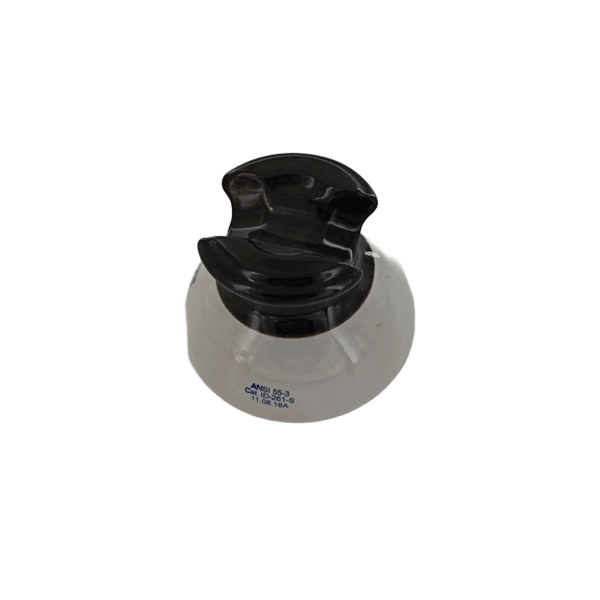
Your insulators age faster than your coffee mug, thanks to salty air, grime, and surprise lightning, leaving you juggling outages, cleaning crews, and angry emails before breakfast.
Use climate‑aware designs, better materials, and condition monitoring, guided by reports like this IEEE insulator performance study, to extend service life and cut emergency repairs.
⚡ Influence of Coastal Salt Fog on Powerline Insulator Aging and Flashover
Coastal salt fog coats insulator surfaces with conductive salt. When the surface becomes wet, leakage current rises and flashover risk increases sharply on aged insulation.
Proper design, cleaning plans, and quality products reduce failures. Coastal lines often use stronger units such as the High voltage suspension 120 kN porcelain insulator U120B to handle harsh marine environments.
1. Salt Deposit Density and Surface Conductivity
Higher salt deposit density (SDD) creates a thin conductive film. Under fog or drizzle, voltage distributes unevenly and dry bands form hot spots on the insulator string.
- Frequent sea breeze → faster salt buildup
- Longer strings needed for high SDD
- Regular washing lowers SDD and failure risk
2. Wetting–Drying Cycles and Microcrack Growth
Salt crystals grow in pores and microcracks. Daily wetting and drying cycles slowly widen these cracks, which reduces mechanical strength and surface glaze quality.
| Condition | Effect on Porcelain |
|---|---|
| Constant dry | Low crack growth |
| Wet–dry cycles | Medium crack growth |
| Salt + wet–dry | High crack growth |
3. Flashover Mechanisms in Coastal Storms
During storms, salt-contaminated insulators get fully wet. Leakage current heats dry bands, creates arcs, and may lead to complete flashover along the surface.
- High wind drives salt inland
- Rain and fog activate deposits
- Insufficient creepage distance raises risk
4. Mitigation: Design, Coatings, and Maintenance
Engineers use hydrophobic coatings, longer creepage, and graded strings. Condition-based washing schedules keep contamination below critical levels and extend service life.
- Silicone coatings shed water
- Online monitoring tracks leakage current
- Targeted washing cuts outage time
🌧️ Effects of Acid Rain and Humidity Cycles on Insulator Surface Degradation
Acid rain slowly attacks porcelain glaze and metal fittings. Combined with humidity cycles, it roughens the surface and increases the chance of pollution-related flashover.
Proper material selection and drainage design help control these effects and support long-term grid reliability in industrial and urban climates.
1. Chemical Attack on Porcelain Glaze
Acid rain leaches alkali components from the glaze, leaving a rough, dull surface that holds more dirt and moisture than a smooth, glossy finish.
| Rain pH | Glaze Damage Rate |
|---|---|
| 7.0 (neutral) | Very low |
| 5.6 (typical) | Low |
| 4.5 (acidic) | Medium |
| 3.5 (strongly acidic) | High |
2. Humidity Cycles and Surface Resistivity
Daily humidity changes drive thin water films on and off the surface. This cycle changes surface resistivity and encourages uneven current paths and local heating.
- High night humidity → conductive layer
- Daytime drying → dry bands form
- Repeated cycles → aging and tracking
3. Corrosion of Metal Fittings and Cement Joints
Acidic moisture attacks metal caps, pins, and cement joints. Rust products expand, stress the porcelain, and can start radial cracks or loosen fittings.
- Galvanizing loss speeds up corrosion
- Cracked cement lets water in
- Regular inspection limits failures
4. Selection of Acid-Resistant Designs
Utilities often choose thick-glaze, low-porosity porcelain and well-sealed metal parts in acid rain regions to extend insulator life at a reasonable cost.
- Quality glaze resists leaching
- Good seals block water paths
- Standard tests verify durability
🌡️ High Temperature, UV Radiation, and Their Role in Insulator Material Fatigue
High temperature and strong UV radiation accelerate aging of both porcelain and polymer housings, leading to surface chalking, microcracks, and loss of strength.
Thermal design and UV-stable materials are key to long service life in desert and high-altitude lines.
1. Thermal Expansion, Cycling, and Fatigue
Daily temperature swings cause expansion and shrinkage. Over years, this cycling can weaken cement joints and create fine cracks in the porcelain body.
- Large temperature range → higher stress
- Thick sections heat and cool slowly
- Good cement mix reduces damage
2. UV-Induced Surface Aging of Insulators
UV radiation breaks down organic materials and can roughen composite housings. On porcelain, it mainly speeds up other weathering processes and glaze wear.
| Exposure Level | Typical Effect |
|---|---|
| Low | Slow discoloration |
| Medium | Surface microcracks |
| High | Chalking, hydrophobic loss |
3. Design Choices for Hot and Sunny Regions
Engineers use lighter colors, UV-resistant materials, and adequate creepage to lower surface temperature and hold performance under intense sun and heat.
- Light glazes reflect sunlight
- UV stabilizers in polymers
- Proper clearances avoid overheating
🏭 Industrial Pollution Deposition, Leakage Currents, and Insulator Service Life Reduction
Industrial pollution deposits conductive dust, soot, and chemicals on insulators. When wet, these layers create strong leakage currents that shorten service life.
Careful site surveys and product selection help grids stay reliable near factories, ports, and mining areas.
1. Types of Industrial Pollutants and Their Effects
Typical pollutants include cement dust, coal ash, metallic fumes, and chemical mists. Many are corrosive and trap moisture, which raises surface conductivity.
- Cement dust → thick layers
- Coal ash → high conductivity
- Chemical mists → strong corrosion
2. Leakage Currents and Dry-Band Arcing
When pollutants get wet, current flows along the insulator. As parts dry, arcs jump across dry bands and can form permanent tracking paths.
| Pollution Level | Leakage Current Trend |
|---|---|
| Low | Stable, small current |
| Medium | Occasional spikes |
| High | Frequent arcing |
3. Insulator Selection and Cleaning Strategies
In heavy pollution zones, engineers may choose units like the High voltage post electrical porcelain insulator 57-1 or the high voltage suspension 40 kn electrical porcelain insulator 52-1 porcelain insulators and apply live-line or offline washing plans.
- Choose higher creepage distance
- Use silicone grease or coatings
- Set washing cycles by pollution level
🌪️ Sandstorms, Wind-Borne Particles, and Erosion Mechanisms on Powerline Insulators
Sandstorms blast insulators with fast-moving particles. Over time, this erosion changes shed shape, increases surface roughness, and slightly reduces mechanical strength.
Desert lines need robust designs, strong fittings, and smart orientation to reduce direct sand impact on critical surfaces.
1. Mechanical Erosion of Glaze and Metal
Hard sand grains chip glaze and scratch metal parts. This wear exposes fresh surfaces that may corrode faster under moisture and pollution.
- Wind speed raises impact energy
- Coarse sand causes deeper pits
- Rounded profiles reduce damage
2. Change of Shed Shape and Creepage Path
As edges erode, shed profiles become thinner and shorter. Effective creepage distance drops, making flashover under wet or polluted conditions more likely.
| Years in Service | Approx. Creepage Loss |
|---|---|
| 5 | Small |
| 15 | Moderate |
| 25 | High in sandy zones |
3. Design and Maintenance in Arid, Sandy Regions
Utilities favor tough porcelain, thicker glaze, and sometimes shields or fences near towers. Regular inspections locate units with severe erosion before they fail.
- Use high-strength materials
- Inspect during and after sand seasons
- Replace badly eroded strings early
Conclusion
Climate and pollution strongly affect powerline insulator life. Salt fog, acid rain, heat, and dust all change surface properties and increase flashover risk.
By choosing proper insulator types, coatings, and cleaning plans, utilities can manage these stresses, cut outages, and keep long-term operating costs under control.
Frequently Asked Questions about powerline insulators
1. How often should insulators be cleaned in coastal or industrial areas?
The interval depends on local pollution. Many utilities start with annual washing, then adjust based on leakage current records and observed deposit buildup.
2. Why is creepage distance so important for contaminated environments?
Creepage distance is the path along the surface between energized and grounded parts. A longer path lowers surface stress and reduces flashover under wet pollution.
3. When should a porcelain insulator be replaced instead of cleaned?
Replace insulators that show cracks, broken sheds, severe erosion, or rusted fittings with lost strength. Cleaning cannot restore mechanical integrity in these cases.
4. Do UV and high temperature affect porcelain as much as composite insulators?
Porcelain is less sensitive to UV than polymer housings, but heat and UV still speed up glaze wear, cement aging, and small surface defects over time.
5. How can utilities predict insulator end of life?
They combine periodic visual checks, infrared scans, leakage current monitoring, lab tests on removed samples, and system fault data to estimate remaining service life.
 Privacy settings